
Blogs
Rabi Season Farming Challenges: How Farmers Can Achieve a Productive Harvest
The Rabi season marks a crucial period for Indian agriculture each year. Sown during winter and harvested in spring, Rabi crops like wheat, mustard, gram, lentil, and barley feed millions of households and support rural livelihoods. However, this season also brings its own set of challenges that farmers must navigate to secure a good harvest. From unpredictable weather and pest pressures to soil health concerns and market risks, there’s a wide spectrum of issues that can make or break a Rabi crop cycle.
To ensure a productive harvest despite these hurdles, farmers need a blend of traditional knowledge and modern solutions to combat them effectively. This blog will walk you through the challenges of Rabi crops farming and offer practical strategies for success.
Understanding the Rabi Season
Rabi crops are sown after the monsoon ends, typically from October to December, and grow through winter to mature by March–April. Unlike Kharif crops that depend on monsoon rains, the Rabi season relies heavily on stored soil moisture or irrigation. The timing and conditions of the season significantly influence crop performance and final yield.
Major Challenges in Rabi Season Farming
1. Soil Health and Nutrient Management
Continuous farming without replenishing essential nutrients depletes soil fertility. Soils that are deficient in nitrogen, phosphorus, or micronutrients cannot support healthy plant growth.
Best Practices for Soil Health:
- Conduct soil testing before sowing and apply nutrients based on actual deficiency.
- Integrate organic matter, such as compost or farmyard manure, to improve soil structure.
- Avoid excessive tilling to prevent soil erosion and preserve moisture.
Balanced nutrition also helps plants resist pests and diseases and supports better growth throughout the season.
2. Pest and Disease Pressure
Even though colder months generally slow pest activity, insects and diseases still impact Rabi crops. Aphids, termites, and fungal diseases have been documented to affect crops like wheat and gram, leading to yield losses if not managed early.
Regular field inspections help detect pest infestations or early signs of disease. For instance, spotting insect damage on leaves or detecting fungal leaf spots early allows farmers to act promptly.
How to Control Pests and Diseases:
- Follow Integrated Pest Management (IPM) approaches that combine cultural, mechanical, biological, and chemical controls.
- Choose products wisely from the Top Agrochemical Companies in India, which offer scientifically formulated and registered crop protection sprays.
Using products judiciously ensures effective pest control without harming beneficial insects or the environment.
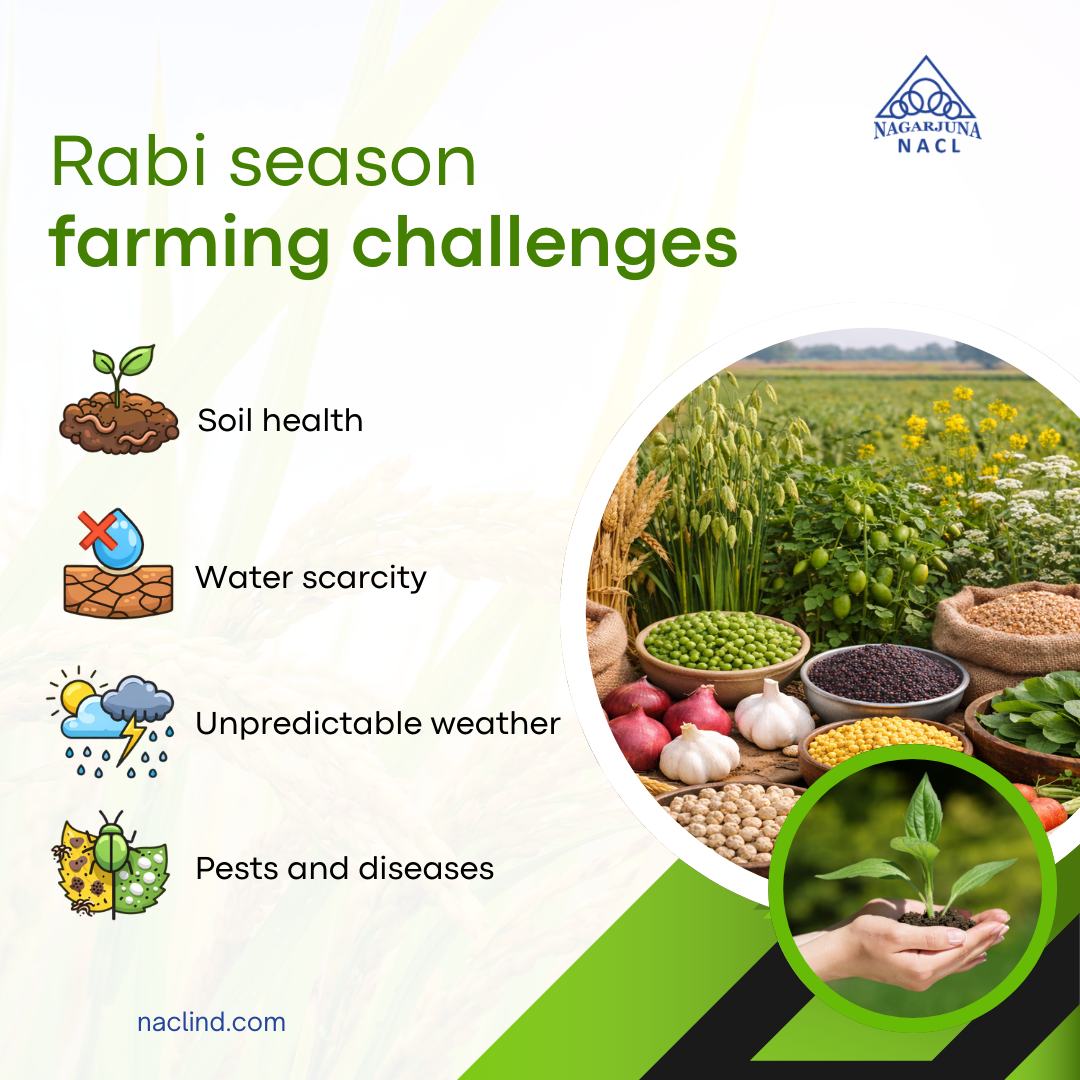
3. Water Scarcity and Irrigation Issues
Since the Rabi season largely depends on irrigation, insufficient water resources pose a serious risk. Groundwater depletion, inefficient irrigation systems, or competition with urban and industrial users can limit timely irrigation access.
Possible Solutions:
- Implement micro-irrigation techniques such as drip or sprinkler systems.
- Harvest rainwater during the monsoon to recharge groundwater or use it in lean seasons.
- Improve canal and reservoir management to ensure storage and efficient distribution.
4. Unpredictable Weather and Climate Extremes
One of the most persistent challenges for Rabi farmers today is weather unpredictability. Erratic rainfall, delayed winter chill, and sudden warm spells can disrupt sowing schedules, compromise crop establishment, and even stress in growing plants. For example, prolonged dry spells during early sowing periods have recently delayed planting in parts of India, affecting crop growth stages and farm planning.
In some regions, unseasonal late rainfall continues into October or November, harming both the previous Kharif harvest and delaying Rabi sowing operations.
Impact on Farmers:
- Delayed sowing reduces the crop’s growing period.
- Temperature fluctuations can cause stress or frost damage.
- Water scarcity or excess complicates irrigation planning.
How to Tackle It:
- Plan sowing dates based on local climate forecasts rather than fixed calendars.
- Use drought-tolerant or regionally adapted seed varieties.
- Build flexible irrigation systems that help conserve water.
5. Market Price Volatility and Economics
Even when a farmer successfully produces a good crop, unpredictable market prices or high input costs can reduce profitability. Rabi crop farmers must balance production investments like seeds, fertilizers, pesticides, irrigation, and labor with uncertain selling prices.
Strategic Steps:
- Stay informed about MSP (Minimum Support Price) announcements.
- Diversify crops to spread economic risk.
- Engage with local markets and cooperatives for better price negotiations.
Practical Tips for a Productivity Boost
Choose High-Quality Seeds
Investing in certified quality seeds and fertilizers lays a strong foundation for Rabi crops. Seeds with resistance to specific diseases or adapted to local climate conditions improve germination and overall crop vigor.
Adopt Sustainable Soil Practices
A healthier soil means healthier crops. Practices like crop rotation, organic matter addition, and conservation tillage not only preserve nutrients but also help retain moisture and suppress pests.
Use Crop Protection Solutions Responsibly
To effectively protect standing crops from pests, it is essential to rely on trusted crop protection solutions and pesticides. However, pesticide use should be based on actual need rather than routine blanket sprays.
Farmers should always:- Adhere to label instructions.
- Avoid spraying during peak bee activity.
- Rotate modes of action to delay the development of pesticide resistance.
Integrate Technology and Weather Forecasts
Taking advantage of weather forecasts and mobile advisories can help farmers plan field operations better, avoiding avoidable risks from sudden rainfall, frost, or heat waves.
Build a Support Network
Community-level resource sharing, access to expert agronomists, and farmer-producer organizations help share knowledge and negotiate better input prices and market deals.
Final Thoughts
Rabi season farming is both a challenge and an opportunity. While low temperatures, water scarcity, pest infestations, and economic pressures can make the season demanding, strategic planning and improved agronomic practices pave the way to success. A productive harvest results not just from high-quality seeds or appropriate fertilizers, but also from timely decisions, sustainable cultivation methods, and the integration of advanced crop protection solutions, such as integrated pest management and expert guidance from leading agrochemical companies in India.
By understanding challenges and adopting a comprehensive farm management plan, farmers can look forward to healthy crops, better yields, and improved income even in the face of seasonal adversities.
