
Blogs
Identifying and Preventing Anthracnose in Tomato Crops
Tomato farming can be incredibly rewarding, but it also comes with its share of risks. Among the many diseases that threaten tomato crops, anthracnose is one of the most damaging, especially when it strikes close to harvest. Many farmers first notice the problem when fruits begin to ripen and suddenly develop dark, sunken spots that make them unmarketable. By then, the infection has already taken hold.
Understanding anthracnose early, how it appears, spreads, and can be controlled, is the key to protecting both yield and quality. With timely intervention and the right crop protection solutions, farmers can significantly reduce losses and maintain healthy tomato fields.
What Is Anthracnose in Tomato?
Anthracnose in tomatoes is a fungal disease commonly caused by Colletotrichum species. The fungus survives in soil and infected crop debris and spreads rapidly under warm, humid conditions. It primarily affects ripe or nearly ripe fruits, though stems and leaves can sometimes show symptoms.
The disease tends to become severe during periods of high humidity, frequent rainfall, or overhead irrigation. Fields with poor air circulation or continuous tomato cultivation are especially vulnerable.
Recognizing the Symptoms Early
Early detection plays a vital role in disease management. Farmers should regularly inspect their fields, especially as fruits begin to mature.
1. Symptoms on Fruits
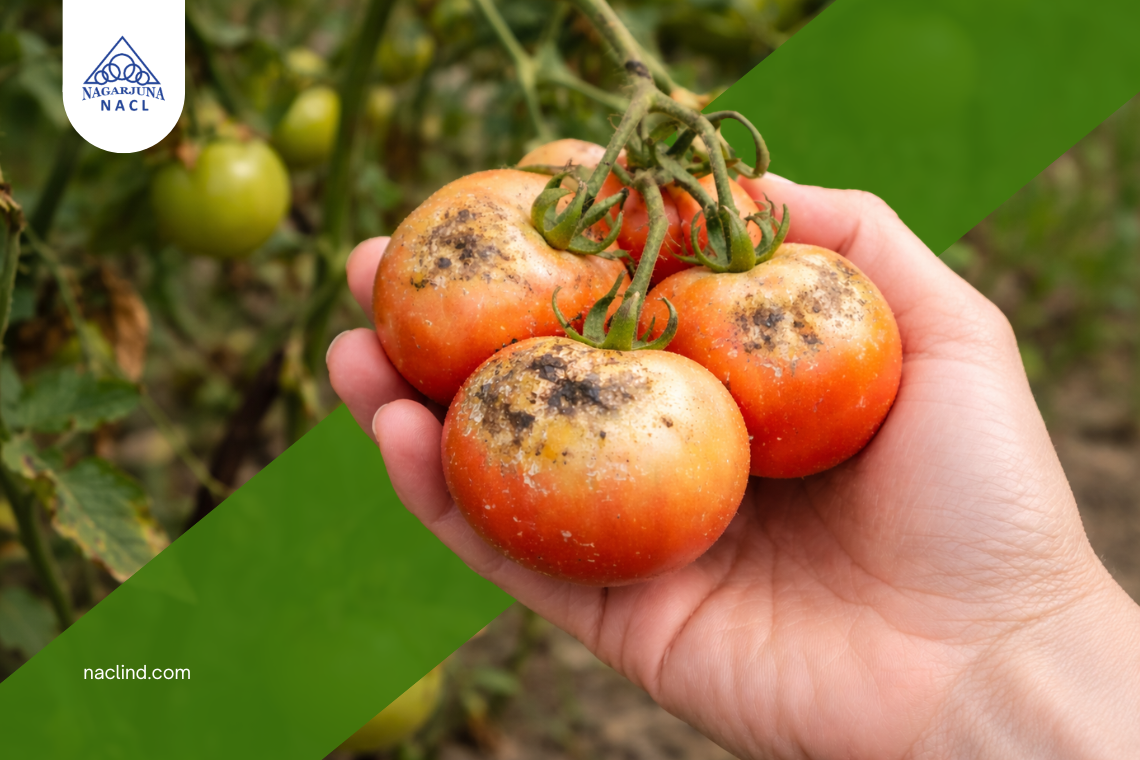
- Small, circular, water-soaked spots appear on ripening fruits.
- These spots gradually enlarge and become dark, sunken lesions.
- The center of the lesion may develop black fungal spores arranged in concentric rings.
- In severe cases, multiple lesions may merge, leading to fruit rot.
Affected fruits often drop prematurely or lose their market value due to poor appearance and decay.
2. Symptoms on Leaves and Stems
Although less common, infection can appear as:
- Dark, irregular spots on leaves.
- Lesions on stems may weaken plant structure.
However, fruit damage remains the most economically significant symptom.
Conditions That Favor Anthracnose
Certain field conditions encourage the development and spread of anthracnose:
- Warm temperatures between 24–30°C
- High humidity or prolonged leaf wetness
- Overhead irrigation practices
- Continuous cropping without rotation
- Infected plant debris left in the field
Understanding these factors helps farmers plan preventive measures rather than waiting for visible damage.
Economic Impact on Tomato Farmers
Anthracnose does not just reduce yield; it directly affects quality. Tomatoes infected close to harvest may look healthy at first but develop lesions during storage or transport. This leads to rejection in wholesale markets and lower prices.
For commercial growers supplying supermarkets or export markets, even minor fruit blemishes can cause significant financial setbacks. Therefore, prevention is more economical than a cure.

Preventive Measures for Anthracnose Management
Effective disease control begins before planting and continues throughout the crop cycle.
1. Crop Rotation
Avoid planting tomatoes or other solanaceous crops in the same field year after year. Rotating with cereals or legumes reduces fungal buildup in soil.
2. Use Disease-Free Seeds and Seedlings
Always procure certified seeds and healthy seedlings. Strong seedlings establish better and are less susceptible to infection.
3. Field Sanitation
- Remove and destroy infected plant debris after harvesting.
- Control of weeds that may act as alternate hosts.
- Maintain clean cultivation practices.
Sanitation reduces the fungal load in the field.
4. Proper Spacing and Pruning
Adequate plant spacing improves air circulation and reduces humidity around foliage. Pruning lower leaves that touch the soil can also minimize infection risk.
5. Avoid Overhead Irrigation
Switching to drip irrigation helps keep foliage dry and reduces the spread of fungal diseases. Water management is a critical yet often overlooked part of crop protection solutions.
Chemical Control and Fungicide Management
When environmental conditions favor anthracnose, preventive fungicide sprays become necessary. The key is to apply them before the disease becomes severe.
Farmers often rely on products recommended by agronomists and supplied by trusted Agrochemical Manufacturers in India. Using high-quality formulations ensures better coverage, consistent results, and compliance with safety standards.
Choosing the Right Fungicide
Several contact and systemic fungicides are effective against anthracnose when used appropriately. Copper-based fungicides, chlorothalonil, and certain systemic triazoles are commonly recommended.
When selecting a product, farmers often look for the Best Fungicide in India for their crop stage and disease pressure. It is important to:
- Rotate fungicides with different modes of action to prevent resistance.
- Follow label instructions for dosage and spray intervals.
- Maintain pre-harvest intervals to ensure produce safety.
Many Top Agrochemical Companies in India invest heavily in research to develop improved formulations that offer better disease control with lower environmental impact. Consulting local agricultural experts helps in choosing the most suitable product for regional conditions.
Integrated Disease Management Approach
Relying solely on chemical sprays is not sustainable. An integrated strategy combining cultural, biological, and chemical methods delivers better long-term results.
Cultural Practices
- Balanced fertilization to avoid excessive nitrogen, which can make plants more vulnerable.
- Mulching to reduce soil splash and fungal spread.
- Timely harvesting to avoid overripe fruits staying in the field.
Biological Control
Bio-fungicides based on beneficial microbes can suppress fungal growth in soil. These options are gaining popularity as part of modern crop protection solutions.
Monitoring and Early Action
Regular scouting allows farmers to detect early symptoms and respond quickly. Waiting until fruit damage becomes widespread often leads to higher control costs.
Post-Harvest Precautions
Anthracnose can persist after harvesting. To minimize losses:
- Handle fruits carefully to avoid injuries.
- Store tomatoes in dry, well-ventilated areas.
- Avoid mixing infected fruits with healthy produce.
Proper grading before marketing also helps maintain reputation and buyer trust.
Conclusion
Anthracnose in tomato crops can quietly reduce profits if left unmanaged. Recognizing early symptoms, especially sunken dark lesions on ripening fruits, allows farmers to act before the disease spreads.
Prevention begins with clean cultivation, proper crop rotation, and water management. When needed, selecting the Best Fungicide in India for Agriculture from reliable sources and applying it responsibly strengthens disease control efforts. Combined with guidance from Top Agrochemical Companies in India and a well-planned crop protection strategy, farmers can effectively safeguard their tomato fields.
A proactive approach not only protects yields but also maintains fruit quality, ensuring that every harvest reaches the market in its best condition.
