
Blogs

Management of Late Blight in Potato Crop
Potatoes are among the most widely grown and economically important crops worldwide, including in India. However, potato farmers often face a serious threat during the growing season-Late Blight, a disease caused by the pathogen Phytophthora infestans, which can quickly devastate a crop if not managed properly in time. Left unchecked, late blight can spread rapidly through the field, causing massive yield and quality losses and even leading to tuber rot in storage if infected plants are harvested and stored carelessly.
In this blog, let’s learn about a comprehensive management plan for preventing late blight in potatoes that includes effective crop protection solutions, particularly fungicides used at appropriate stages for plant disease control.
How To Identify Late Blight in Potatoes
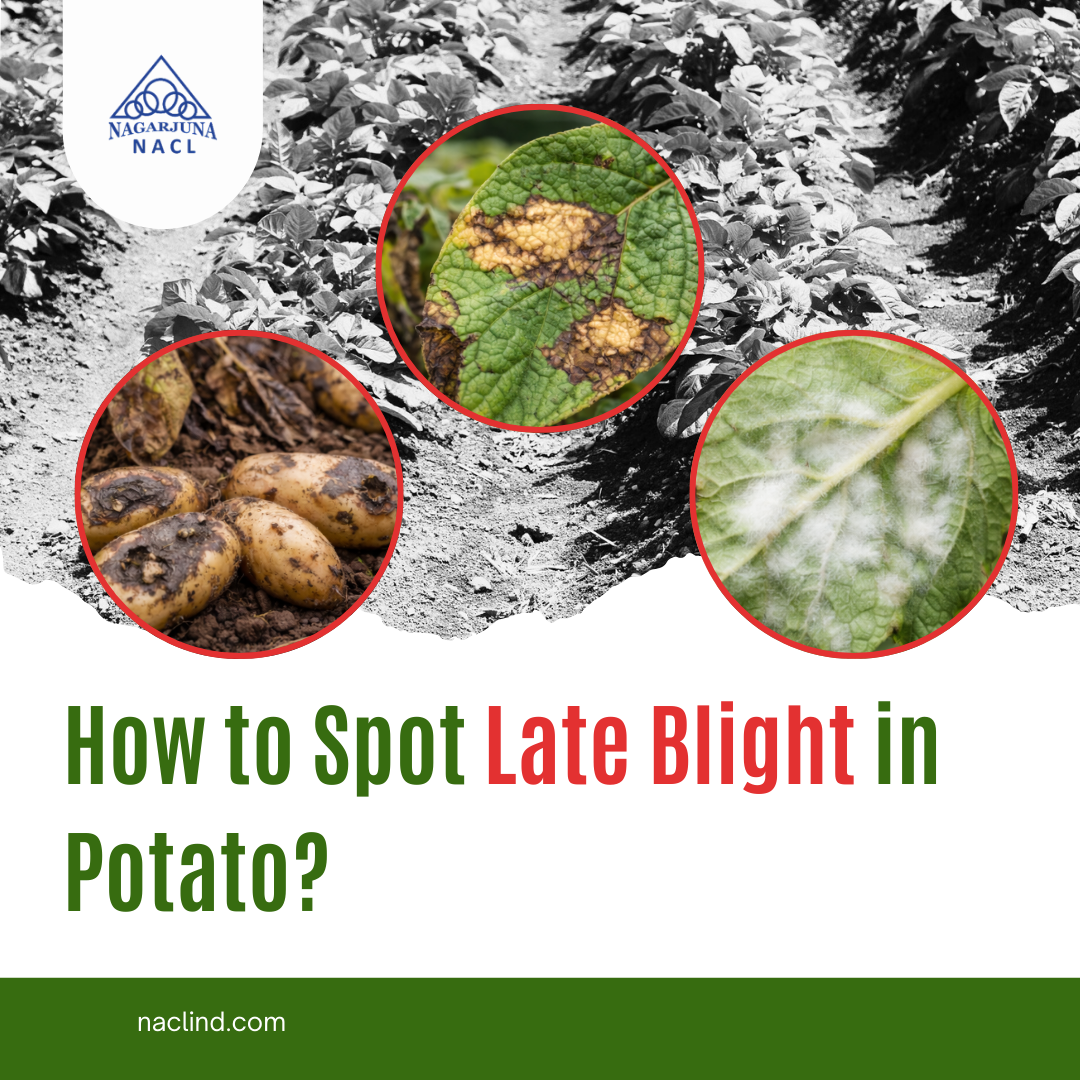
Late blight is notorious for its rapid spread. This disease thrives in cool, moist conditions with high humidity, especially when temperatures range from 8–15°C, conditions common during rainy, misty weather. Infected plants initially show dark brown, water-soaked lesions on leaves and stems, often with a pale margin, followed by white fungal growth on the undersides of leaves. If left unchecked, the infection quickly spreads across the entire canopy and down to tubers, potentially wiping out entire fields in just a few days.
Management Practices to Prevent Late Blight
1. Early Detection and Field Monitoring
Regular inspection of potato fields is a cornerstone of late blight management. Farmers should examine plants at least once a week during susceptible periods, especially when nights are cool and days are overcast. These conditions favor sporulation. The first sign of trouble is often water-soaked spots on leaves that rapidly enlarge and develop darker centers with light margins. These early symptoms should prompt immediate action, as late blight can cause significant damage quickly.
Field monitoring also allows growers to time for fungicide applications more effectively. Fungicides are most effective when applied before infection or at the very first sign of symptoms (Prophylactic sprays). Waiting until the disease is advanced makes control far more difficult and can lead to higher economic losses. Integrating monitoring with weather forecasts gives farmers an edge in anticipating disease outbreaks and helps schedule protective and curative sprays accordingly.
2. Cultural Practices to Reduce Disease Pressure
Good agricultural practices complement chemical control. Crop rotation with non-host crops helps reduce the pathogen’s presence in the soil. Avoiding dense plantings influences the crop micro-climate by improving air circulation inside the canopy, reducing leaf wetness and making the environment less favorable for late blight development. Similarly, removing crop residues and volunteer plants and weeds removes potential inoculum sources. Avoiding overhead irrigation in the evening or early morning can reduce the duration of leaf wetness, lowering the risk of infection.
Balanced fertilization also plays a role. Excessive nitrogen promotes lush foliage, which is more susceptible to disease, while adequate levels of certain nutrients can strengthen plant defenses against pathogens. These practices, when combined with regular scouting and targeted fungicide use, increase a grower’s ability to stay ahead of late blight.
3. Fungicides: The Frontline Defense
Fungicides are indispensable in protecting potato crops from late blight, especially during high-risk periods. They form part of a comprehensive crop protection plan and should be chosen based on their mode of action, disease pressure, and weather conditions.
When To Apply Fungicides?
The timing of fungicide applications is as important as the choice of products. Preventive applications should begin early in the season, even before symptoms appear, especially if the weather forecast indicates long periods of cool, humid conditions. If symptoms have already begun to appear, systemic fungicides, which can act curatively, should be integrated into the spray schedule. Alternating fungicides with different modes of action helps prevent the pathogen from developing resistance, maintaining long-term effectiveness of the crop protection program.
When selecting fungicides, farmers should look for products listed as effective against oomycete pathogens such as P. infestans. Contact products can be mixed with systemic fungicides to broaden protection. Contact fungicides to protect the leaf surface from infection, while systemic products move within the plant to protect new growth and offer curative activity when infection has already begun. It’s important to follow label directions regarding dose, spray intervals, and application timing to maintain effectiveness and avoid resistance buildup.
Many growers turn to products formulated by the Top Agrochemical Companies in India, specifically designed to offer broad-spectrum protection and strong disease suppression. These companies produce robust products with proven performance under Indian conditions.
Recommended Fungicide Strategy
While chemical control is essential, integrating it with non-chemical methods strengthens overall disease management. Crop rotation with non-host crops reduces the disease burden in the soil, and timely vine destruction prior to harvest minimizes the risk of infected foliage contributing to inoculum levels. Using forecast-based decision support systems that track humidity and temperature can help farmers time fungicide applications more accurately, making the intervention both cost-effective and environmentally sound.
Another often overlooked strategy is seed treatment with fungicides before planting. Treating seed tubers with appropriate agents reduces the chances of the disease entering the field from the start, especially in regions where late blight is known to be endemic. Fungicides used for seed treatments have become valuable tools in a comprehensive disease management strategy, reducing early-season infections and giving the crop a healthier start.
Conclusion
Effective management of late blight is not a one-time action but a series of well-coordinated steps carried out from planting through harvest. The use of reliable fungicides for plant disease control, sourced from trusted manufacturers, combined with sound agronomic practices, helps build a strong and resilient crop protection program. With careful planning and timely execution, potato farmers can safeguard their fields from this destructive disease and ensure a healthy, productive crop season after season.
