
Blogs

Major Insect Pests Affecting Summer Pulses and How to Manage Them
Summer pulses such as moong (green gram), urad (black gram), and cowpea are vital for improving soil health and providing protein-rich foods. However, rising summer temperatures and dry conditions also create a favorable environment for several insect pests. If not managed promptly, these pests can cause severe yield losses and degrade crop quality.
Understanding these pests and adopting appropriate management practices is crucial for farmers aiming for healthy, profitable harvests. Let’s explore the major insect pests affecting summer pulses and practical ways to control them effectively.
What are the common insect pests in summer pulses?
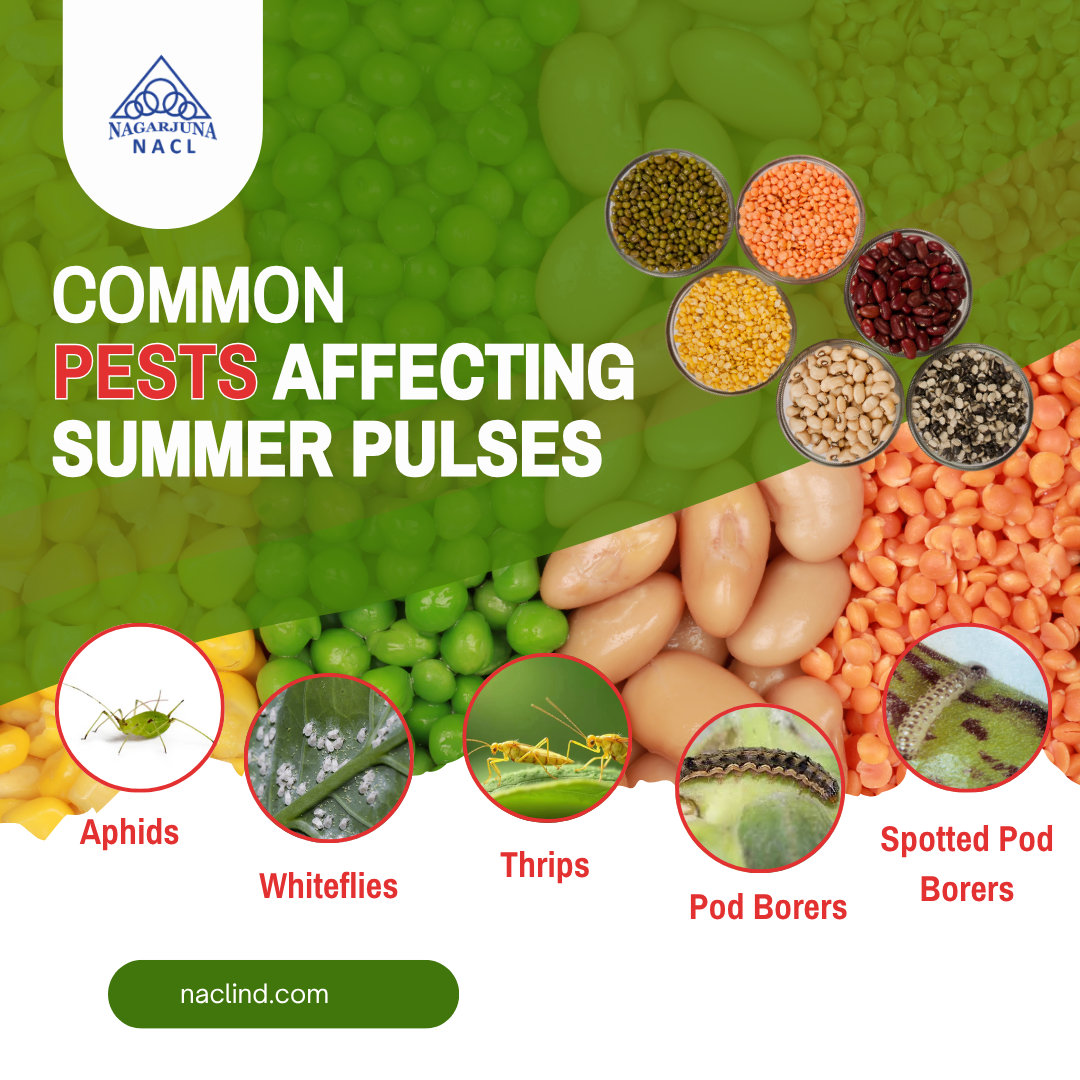
Several insect pests attack pulses during the summer season, but the most common ones include:
1. Aphids
Aphids are tiny, soft-bodied insects that suck sap from leaves and stems. They multiply rapidly and weaken the plant, leading to leaf curling and yellowing.
Management:
- Use resistant varieties if available
- Encourage natural predators like ladybird beetles
- Apply neem-based Agricultural Insecticides
- Spray recommended Pesticides Products when the infestation is high.
2. Whiteflies
Whiteflies suck plant sap and transmit viral diseases, such as yellow mosaic virus, which is a major threat to pulses.
Management:
- Install yellow sticky traps
- Maintain proper spacing for airflow.
- Use selective insecticides from trusted Top Agrochemical Companies in India.
- Avoid excessive nitrogen fertilization.
3. Thrips
Thrips damage plants by scraping and sucking sap, leading to silvery patches and distorted leaves.
Management:
- Monitor fields regularly
- Use neem oil sprays at the early stages.
- Apply suitable Agrochemical products online or from reliable suppliers.
- Maintain field hygiene
4. Pod Borers (Helicoverpa armigera)
Pod borers are among the most destructive pests. They feed on flowers and pods, directly reducing yield.
Management:
- Install pheromone traps
- Handpick larvae in early stages
- Use biological control agents like NPV (Nuclear Polyhedrosis Virus)
- Apply recommended Agricultural Insecticides at economic threshold levels.
5. Spotted Pod Borer (Maruca vitrata)
This pest webs flowers and feeds inside, making it difficult to detect early.
Management:
- Regular field scouting
- Remove affected plant parts.
- Spray appropriate insecticides
- Use integrated pest management practices.
How do you identify pest infestation early in pulses?
Early detection can save crops from heavy damage. Watch for these signs:
- Yellowing or curling of leaves
- Sticky honeydew on plants (aphids/whiteflies)
- Holes in leaves and pods
- Webbing on flowers
- Stunted plant growth
Regular monitoring, especially during early morning or late evening, helps spot pests before they spread widely.
What is the best pest control method for pulses?
There is no single “best” method. The most effective approach is Integrated Pest Management (IPM), which combines multiple strategies:
Cultural Practices
- Timely sowing
- Crop rotation
- Use of pest-resistant varieties
- Proper irrigation management
Mechanical Control
- Handpicking pests
- Using traps (pheromone, sticky traps)
Biological Control
- Encourage beneficial insects
- Use bio-pesticides like neem extracts.
Chemical Control
- Apply insecticides only when necessary.
- Choose products from the Top 10 Pesticide Companies in India to ensure quality and effectiveness.
- Follow recommended dosages to avoid resistance.
When should you spray insecticides on summer pulses?
Timing is critical for effective pest control. Spraying should be done:
- At the early stages of infestation
- When the pest population crosses economic threshold levels
- During calm weather (morning or evening)
- Avoid spraying during peak flowering to protect pollinators.
Using high-quality Pesticides Products ensures better control and reduces the need for repeated applications.
Are organic pest control methods effective for pulses?
Yes, organic methods can be effective, especially when used early and consistently.
Common organic solutions:
- Neem oil sprays
- Garlic-chilli extracts
- Soap water sprays
- Bio-pesticides like Bacillus thuringiensis (Bt)
However, in severe infestations, combining organic methods with selective chemical treatments may be necessary for better results.
How can farmers prevent pest attacks in pulses?
Prevention is always better than a cure. Here are some proactive steps:
- Use certified seeds
- Maintain field sanitation
- Avoid water stress
- Monitor crops regularly
- Purchase Agrochemical products online from reliable sources to ensure authenticity.
- Follow crop-specific pest advisories.
Working with trusted suppliers and Top Agrochemical Companies in India ensures access to effective and safe crop protection solutions.
What role do modern agrochemicals play in pest management?
Modern agrochemicals are designed to be more targeted, efficient, and safer for the environment when used correctly. They help in:
- Quick pest control
- Reduced crop damage
- Higher yield and better quality
- Cost-effective farming
Farmers today have access to a wide range of Agricultural Insecticides and Pesticides Products tailored for specific pests and crops. Choosing the right product at the right time makes a significant difference.
Conclusion
Summer pulses are highly valuable crops, but they require careful protection from insect pests. Aphids, whiteflies, thrips, and pod borers can significantly impact yield if not managed properly.
The key lies in early detection, regular monitoring, and adopting an integrated approach that combines cultural, biological, and chemical methods. By using high-quality Agricultural Insecticides and sourcing reliable Pesticide Products from the Top 10 Pesticide Companies in India, farmers can effectively safeguard their crops.
With the right knowledge and timely action, pest management becomes not just easier, but also more sustainable and profitable.
