
Blogs
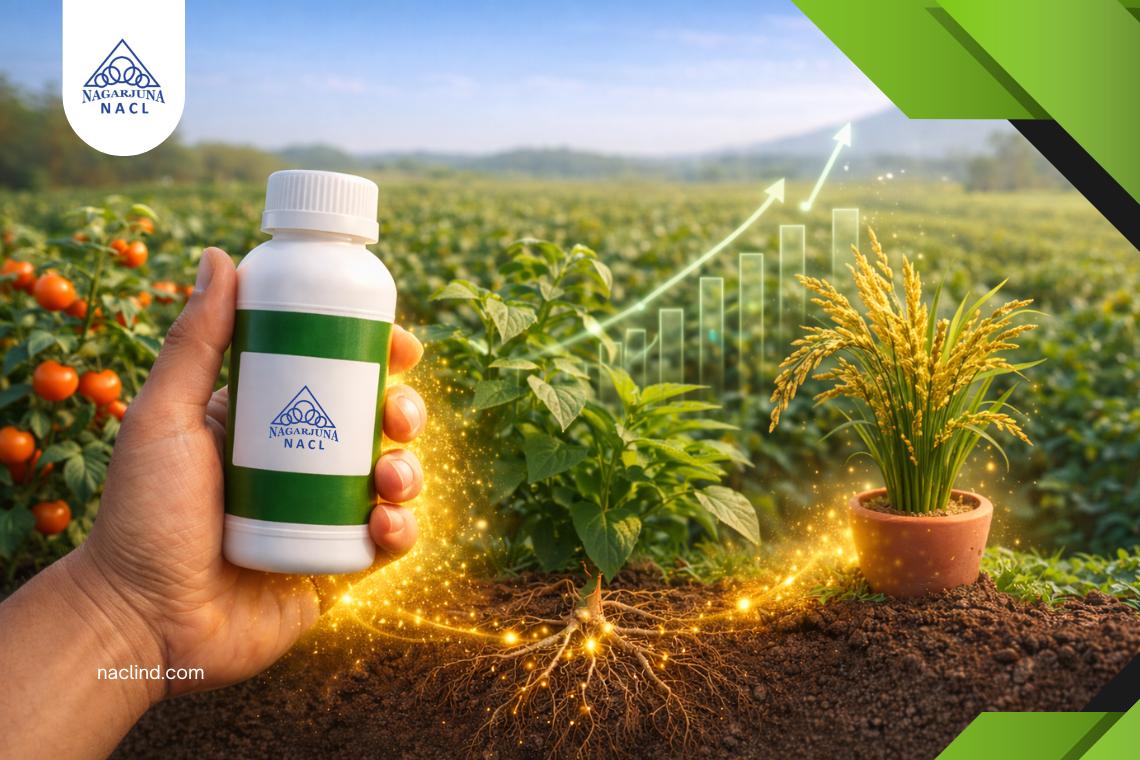
How Plant Growth Regulators Are Shaping the Future of Farming
Agriculture is changing faster today than at any other time in history. With rising input costs, unpredictable weather, and increasing food demand, farmers are under pressure to produce more with fewer resources. In this landscape, Plant Growth Regulators (PGRs) are emerging as one of the most powerful tools to improve crop performance without increasing the burden on the soil or the environment.
Though PGRs have been around for decades, their use has grown tremendously in recent years, thanks to better research, improved agrochemical formulations, and increased awareness among farmers. Today, they play a key role in how crops grow, mature, and respond to stress—ultimately shaping the future of modern farming. Let us go through in detail what PGRs are and how they are shaping the future of farming.
What Are Plant Growth Regulators?
Plant Growth Regulators are organic compounds that cause specific growth and developmental processes in plants. Unlike fertilizers, which adds nutrients to the soil, PGRs act directly on the plant’s internal hormonal system. They can speed up growth, slow down, enhance flowering, improve fruit setting, or strengthen a plant’s ability to tolerate stress.
Most PGRs fall into categories such as:
- Auxins – Promote root development and cell elongation
- Gibberellins – Stimulate stem growth and seed germination
- Cytokinins – Encourage cell division and delay aging
- Ethylene regulators – Influence ripening and senescence
- Abscisic acid derivatives – Enhance drought tolerance
Each plays a distinct role, and when used correctly, they help farmers guide crop behavior with greater precision.
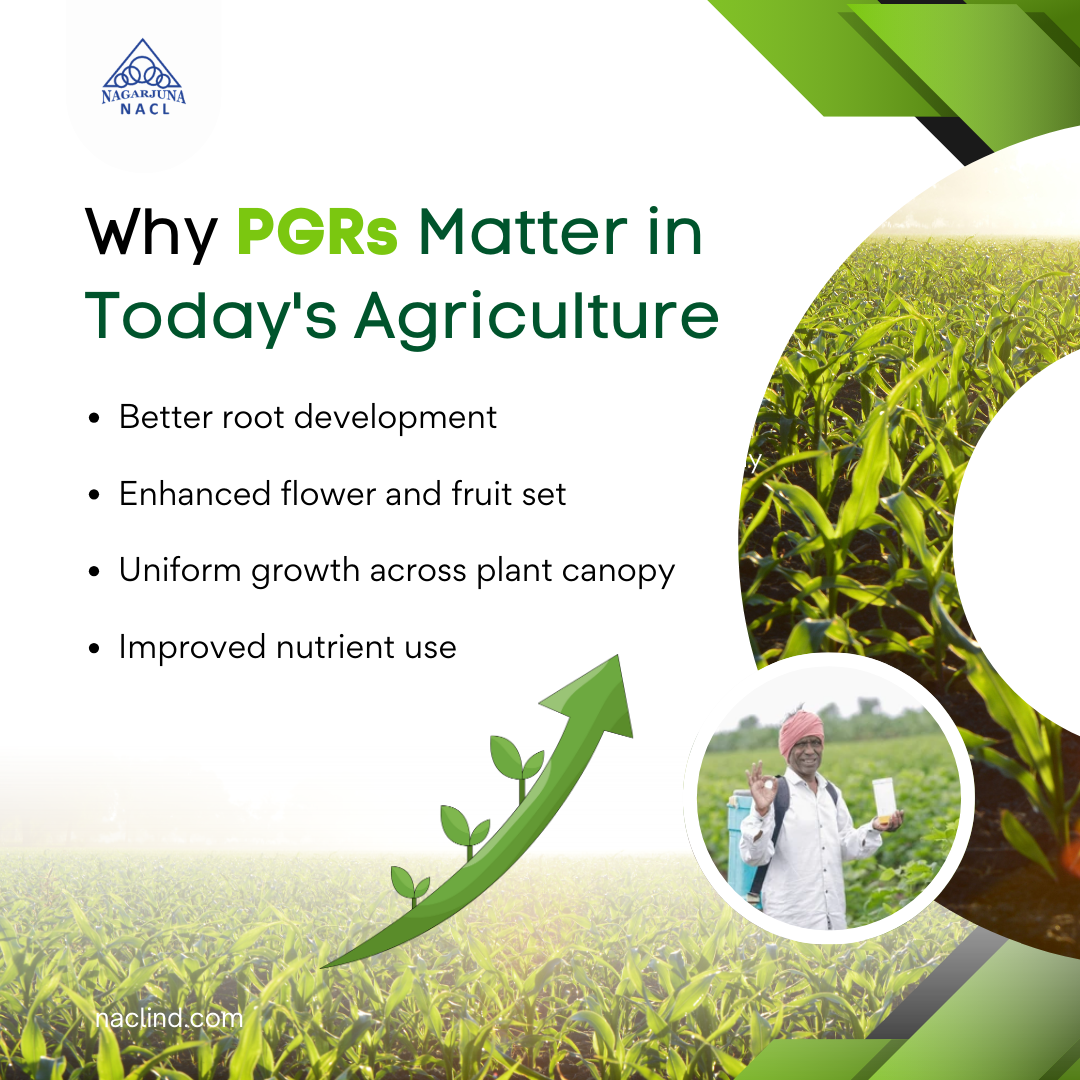
Why PGRs Matter in Today’s Agriculture
One of the biggest challenges for farmers today is managing plant stress. Drought, heat, irregular rainfall, and nutrient deficiencies all reduce productivity. What makes PGRs so valuable is their ability to help crops withstand these challenges.
For instance, cytokinin can delay leaf aging in extreme heat, whereas gibberellins can help young plants overcome early-stage stress. Auxins, when applied correctly, help develop stronger root systems that pull more nutrients from the soil. This ability to support plants under tough conditions has made PGRs essential tools—especially in regions where climate unpredictability is now the norm.
Driving Higher Yields Through Improved Physiology
The use of PGRs is not limited to stress management. They also improve a plant’s overall physiology, which contributes directly to yield.
1. Better Root Development
A strong root system is the foundation of a bountiful and healthy crop. Auxin-based regulators boost root initiation and branching, helping crops absorb water and nutrients more efficiently.
2. Enhanced Flowering and Fruit Set
Gibberellins and cytokinins help synchronize flowering, reduce flower drops, and improve fruit retention. This is particularly beneficial for crops like cotton, paddy, grapes, and vegetables.
3. Uniform Growth
PGRs ensure growth across the plant canopy. This makes harvesting easier and improves the overall quality of the produce, whether it’s grain size, fruit color, or fiber strength.
4. Improved Nutrient Use Efficiency
With fertilizer prices rising, farmers are looking for ways to reduce costs. PGRs improve nutrient uptake, enabling farmers to achieve higher yields even with the same or lower fertilizer doses.
Application of PGRs in Shaping Future Agriculture
When it comes to the future of farming, Plant Growth Regulators (PGRs) have the potential to create a major shift in how crops are managed and improved. Their targeted, science-driven approach opens several promising applications.
1. Crop Breeding
PGRs can play a significant role in developing new crop varieties with desirable traits. By influencing plant physiology at critical growth stages, they help breeders create varieties with higher yield potential, better fertilizer-use efficiency, and stronger resistance to environmental stress.
This makes PGRs a powerful tool in breeding programs focused on long-term agricultural improvement.
2. Crop Management
PGRs enhance crop management practices such as pruning, plant spacing, and irrigation scheduling. When used properly, PGRs help farmers achieve uniform growth, higher-quality produce, and greater overall productivity. They ensure that every plant receives exactly what it needs, resulting in optimized crop performance.
3. Reducing Input Costs
Proper and precise use of PGRs can significantly lower input costs. Farmers can reduce fertilizer usage, irrigation frequency, and labor requirements. By supporting more efficient plant growth, PGRs allow farmers to use fewer resources without compromising yield. This is a major step toward building a sustainable and economically efficient farming system.
4. Drought Resistance
In water-scarce regions, PGRs can be extremely valuable. Certain regulators help plants maintain growth, root development, and metabolic activity even when moisture is limited. This increased drought tolerance ensures crop survival and stability under harsh conditions.
5. Disease Resistance
PGRs also strengthen a plant’s natural defence mechanisms. By boosting immunity and resilience, they help reduce dependency on synthetic crop protection chemicals, making farming more eco-friendly. This contributes to long-term soil and environmental health.
6. Stress Regulation
As climate conditions become increasingly unpredictable, PGRs help crops better withstand stress. They regulate growth processes and help plants respond more effectively to temperature fluctuations, nutrient shortages, water stress, and other climate-induced challenges.
This results in minimized losses and improved agricultural productivity even in changing environments.
7. Targeted Application
One significant advantage of using PGRs in farming is the ability to apply them exactly where needed. Targeted application reduces waste, limits unnecessary use of agrochemicals, enhances crop management efficiency, and minimizes environmental impact.
This approach ensures that every drop applied contributes to better growth and higher yields.
How Farmers Are Using PGRs Across Crops
- Cotton: Cotton farmers use PGRs to manage vegetative growth, promote boll retention, and improve fiber quality.
- Paddy and Wheat: PGRs help strengthen tillering, prevent lodging, and improve grain filling.
- Horticulture: Fruit growers rely on regulators to achieve uniform ripening, color development, and improved shelf life.
- Vegetables: PGRs are widely used to improve flowering, fruit set, and stress tolerance in vegetables such as tomatoes, capsicum, and cucumbers.
- Plantation Crops: In tea, coffee, and sugarcane, PGRs improve elongation, bud break, and sucrose accumulation.
Farmers who strategically adopt PGRs see visible improvements in plant vigor and yield within a season.
Looking Ahead: The Future of PGRs in Farming
Plant Growth Regulators are set to play an even bigger role in the future as agriculture becomes increasingly technology driven. Several advancements are already underway:
- Smart PGRs that release hormones in response to plant signals
- Nano-formulations for precision delivery
- Bio-based PGRs made from natural plant extracts
- Integrated solutions combining PGRs with micronutrients or biologicals
As research deepens and farmers become more aware of these products, PGRs will become an indispensable part of modern crop management.
Conclusion
The rise of Plant Growth Regulators marks a turning point in the way we grow food. By helping plants perform better under stress, use nutrients more efficiently, and produce higher-quality yields, PGRs are shaping for a smarter, more sustainable future for agriculture.
With continuous innovation from the Top Agrochemical Companies in India and improved access to advanced agrochemical formulations, farmers today could grow healthier crops with greater precision than ever before. As PGR adoption continues to rise, they will undoubtedly remain among the most significant tools shaping the future of Indian farming.
